
As a self-taught creative enthusiast, I came to realize that technical skills alone are not enough — understanding the human form is the foundation everything else is built upon. That realization pushed me to finally commit to studying anatomy seriously.
There is no shortage of resources out there, but having too many options can be just as paralyzing as having none. I spent nearly five years caught in that loop — knowing I needed to start, but never quite finding the right way in.
So I changed my approach. Instead of waiting for the perfect moment, I began slowly and intentionally — weaving my existing graphic design background into the learning process to keep things manageable and, more importantly, enjoyable.
This project is the result of that shift in mindset. It is the first part of a three-part series, and it marks the beginning of something I am genuinely excited to build.
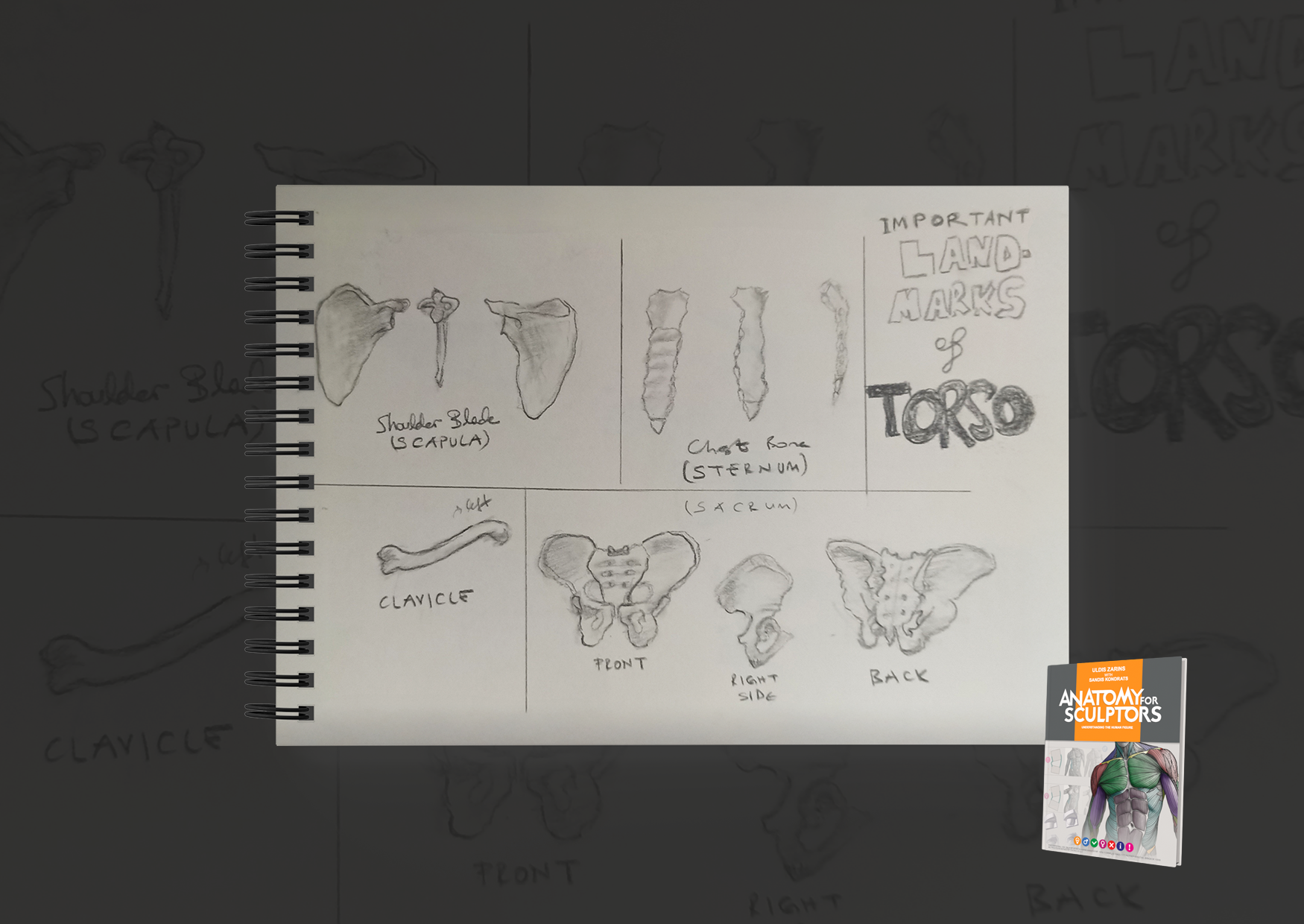
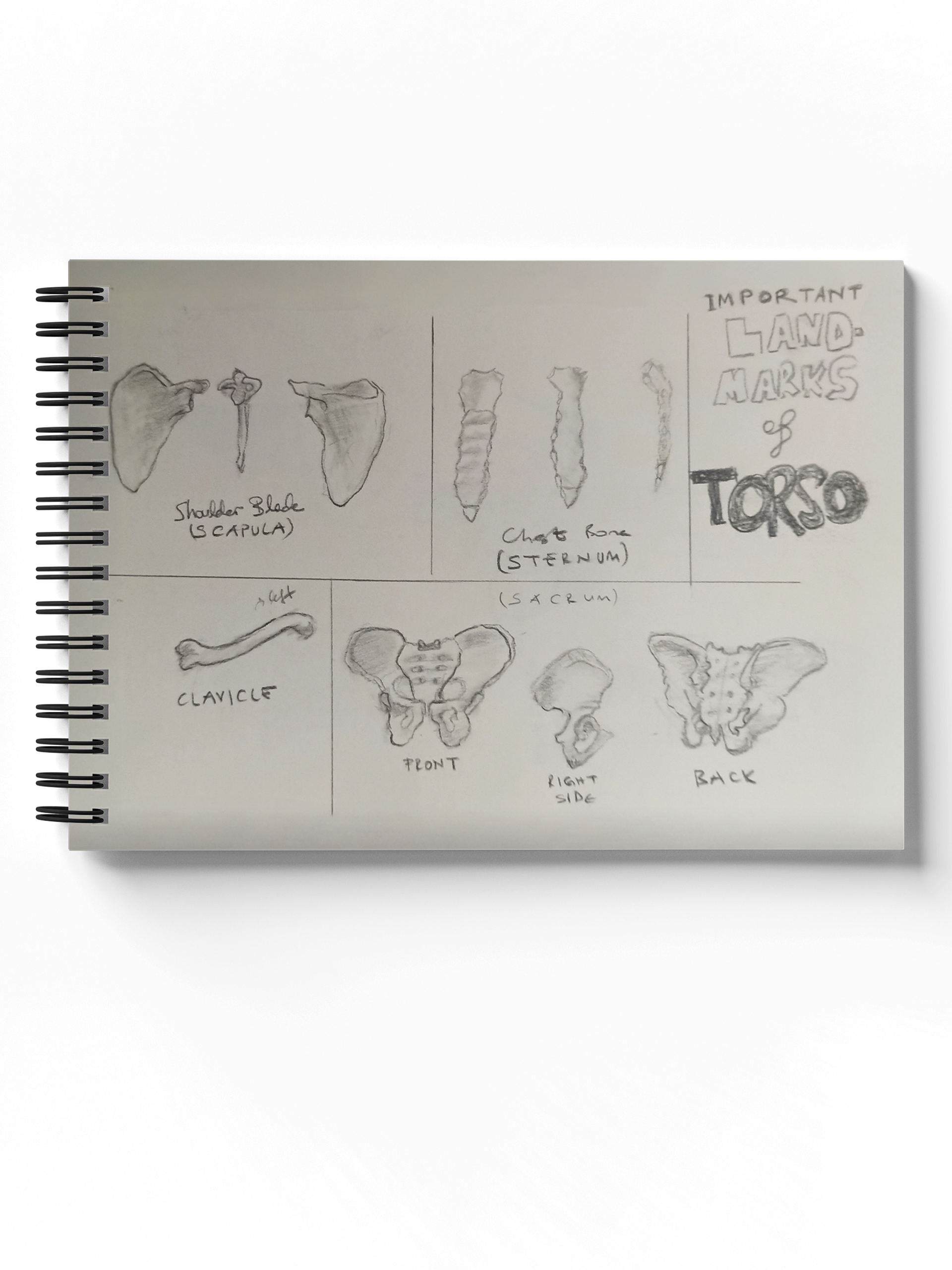
The first step was choosing the right sources — and getting that choice right made all the difference.
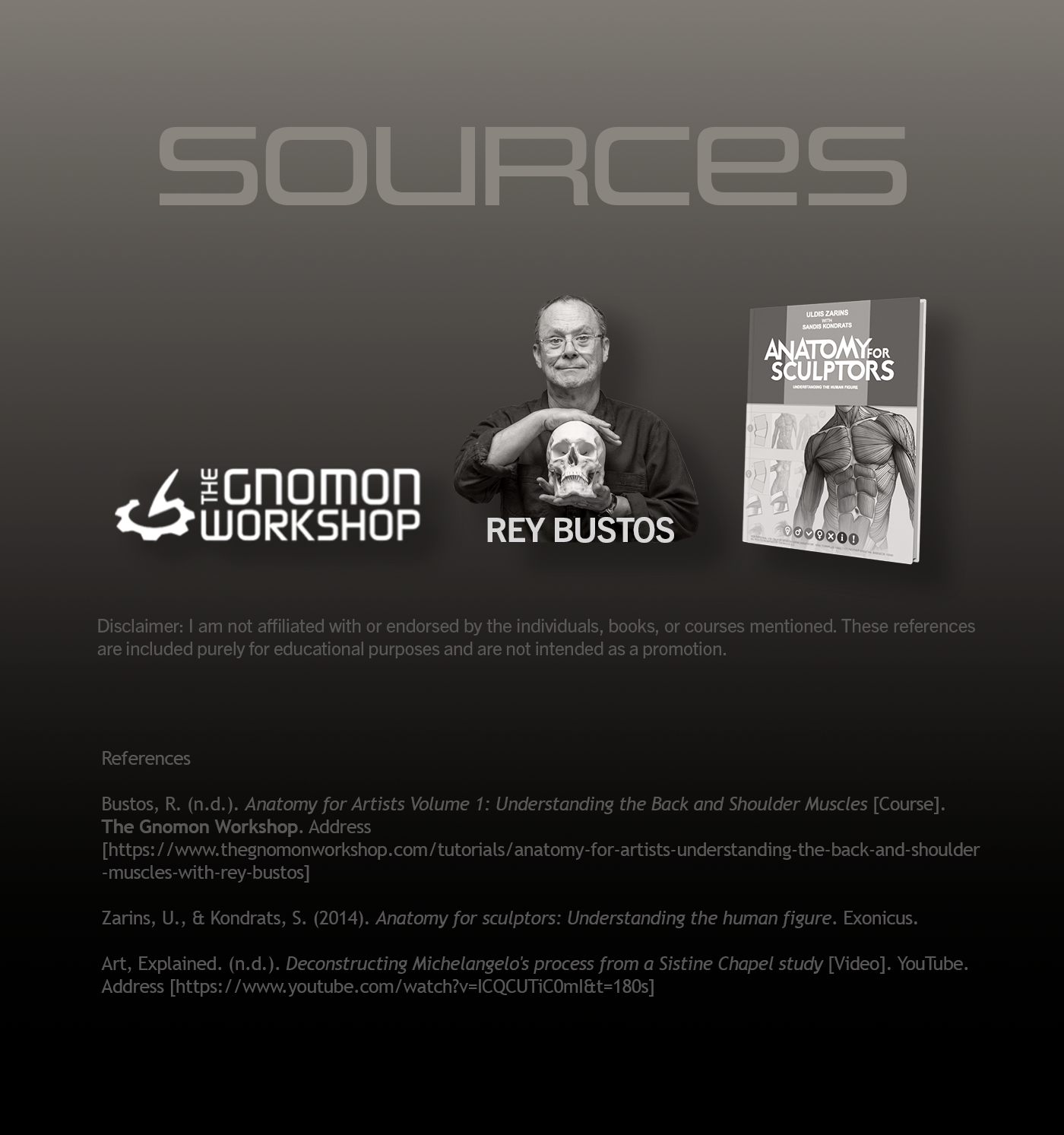
Since my ultimate goal is to move into ZBrush and sculpting, I knew I needed a physical reference built specifically for that purpose. Anatomy for Sculpting became that foundation. Alongside it, I was looking for an instructor who could make complex anatomical concepts genuinely accessible — not just technically accurate, but memorable. I found that in Rey Bustos. His use of metaphor and his ability to break down form into something tangible immediately set him apart.
These two resources turned out to complement each other in a way I had not fully anticipated. Together, they guided me toward a logical starting point: the skeletal landmarks of the torso. Understanding the underlying structure — the scapula, sternum, clavicle, and sacrum — before adding any surface detail proved to be exactly the kind of deliberate, unhurried approach this study needed.
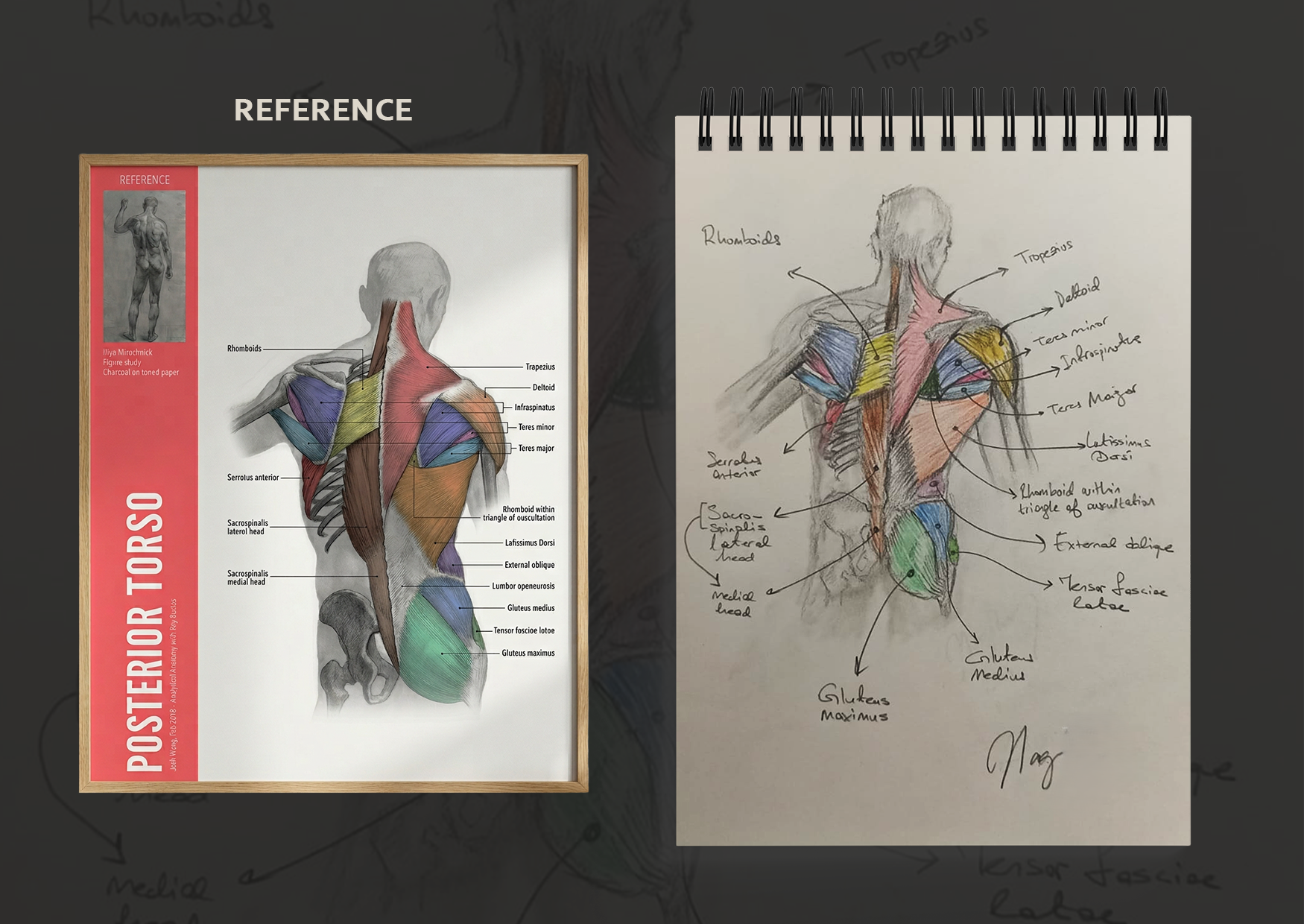
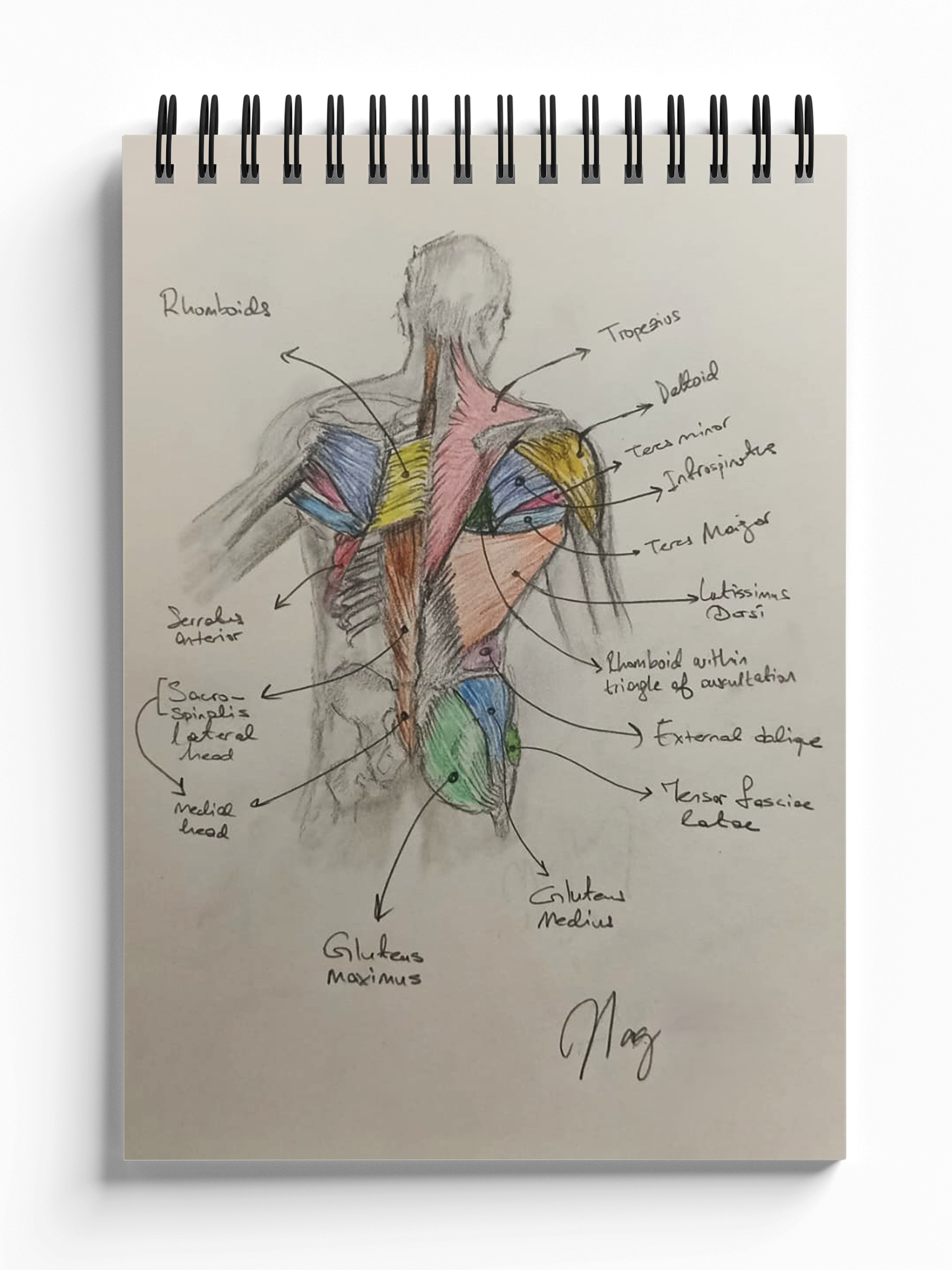
One of the more surprising discoveries in this section was learning that the scapula does not have a fixed bony connection to the ribcage — it effectively floats, anchored only through the clavicle. That single detail reframed how I think about shoulder movement entirely.
Rey Bustos's clock metaphor was particularly effective here. By mapping the scapula's rotation to the positions of a clock face, the relationship between arm elevation and scapular movement became immediately intuitive — the kind of explanation that stays with you long after the lesson ends.
Equally memorable was his description of the sacrospinalis group as loaves of bread stacked along the spine. It sounds simple, but that image made the layered complexity of those muscles far easier to retain and eventually draw from memory.
Good teaching, it turns out, is inseparable from good anatomy study.
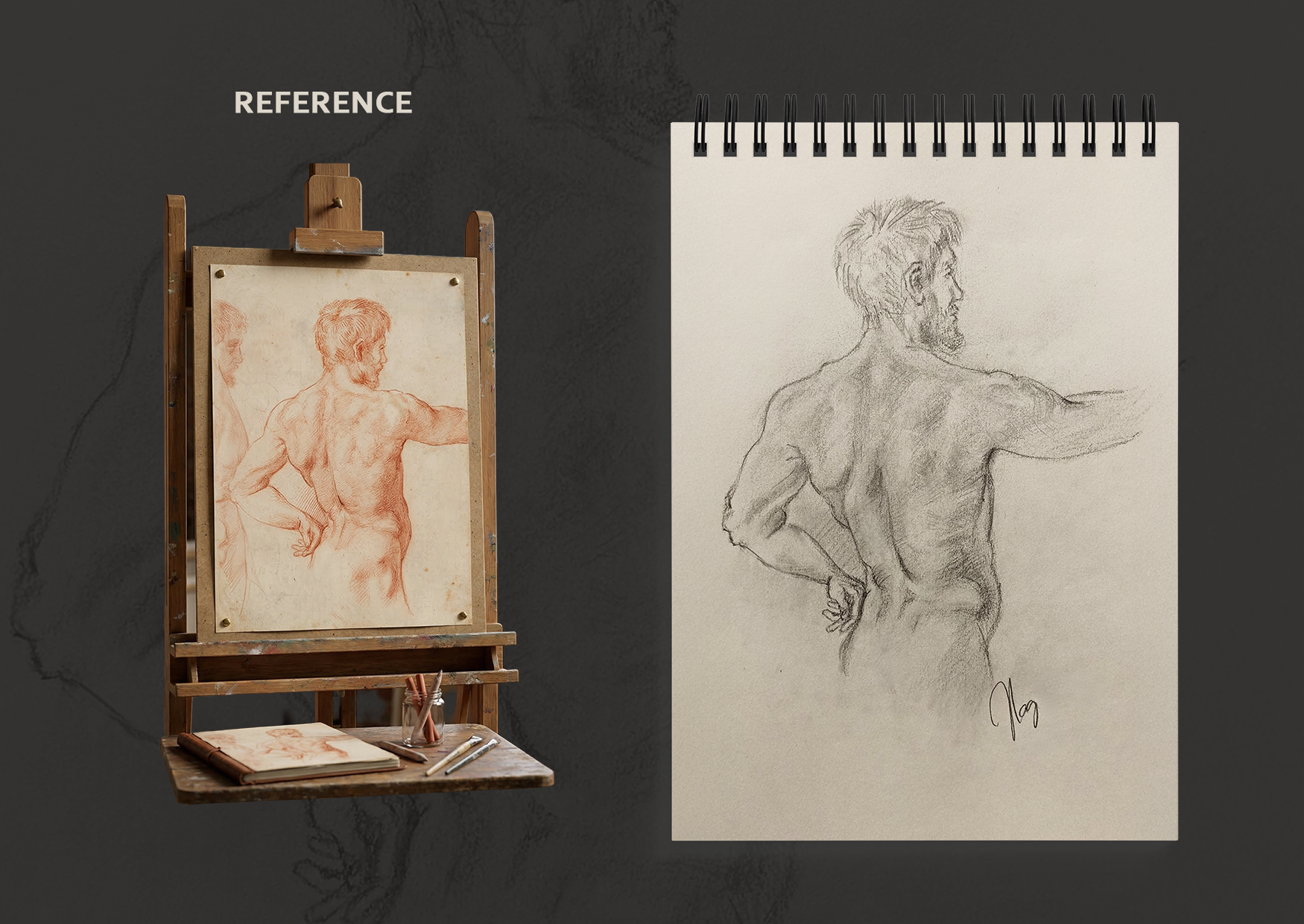
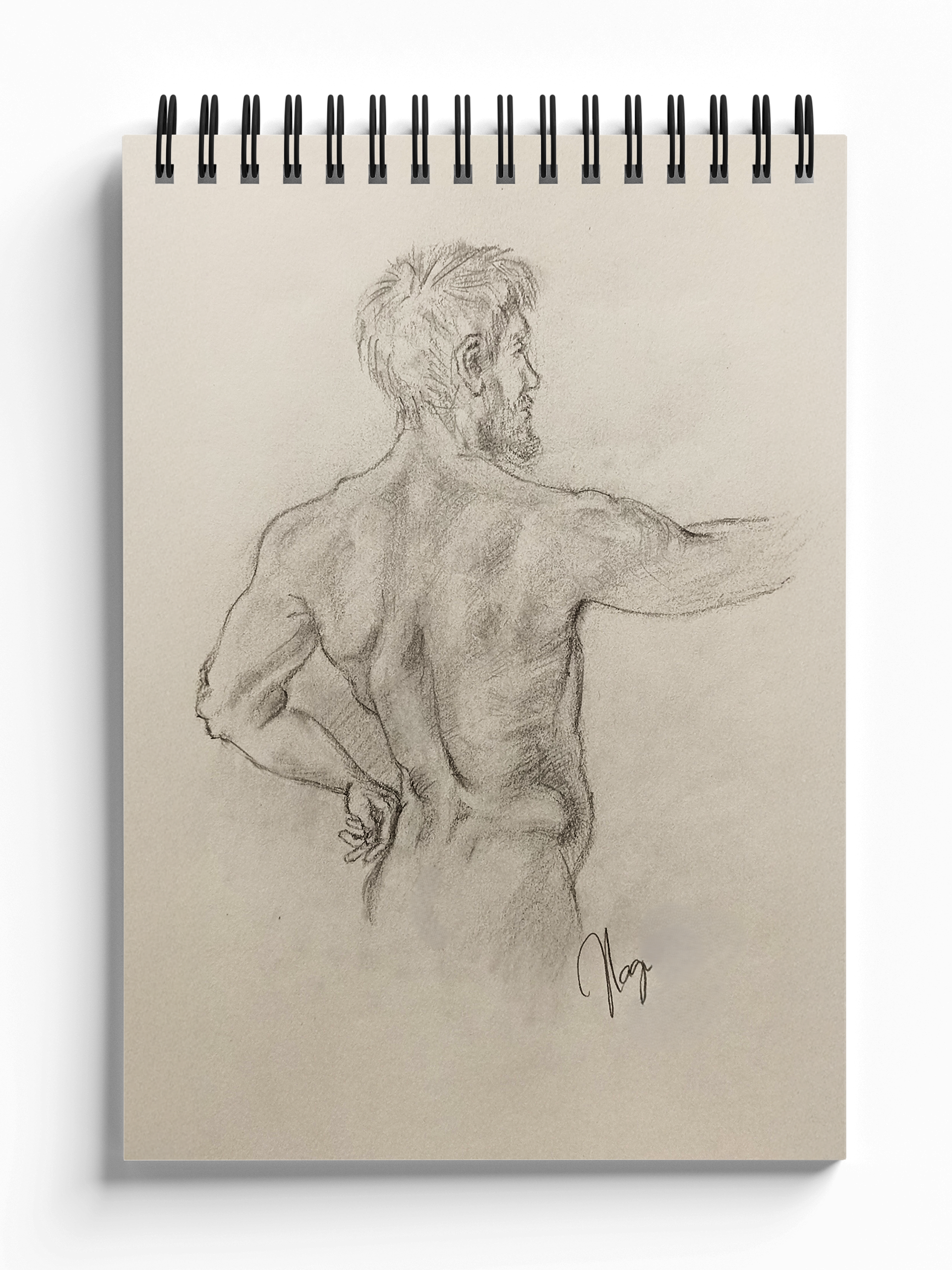
Studying Raphael proved to be one of the more unexpected turning points in this process. What drew me in was not simply the precision of his draftsmanship, but the extraordinary subtlety with which he handled light and shadow — the way tonal shifts follow the form rather than describing it from the outside.
There is a particular quality to his shading that resists easy imitation. The transitions are neither abrupt nor overly blended; they carry a sense of the structure beneath, as though the surface is always a consequence of what lies underneath. For someone approaching figure drawing with an eye toward sculpting, that distinction felt immediately relevant.
If my trajectory were not pointed firmly toward the 3D world, I could see this becoming an entirely separate area of dedicated study. As it stands, Raphael serves as a reminder of how much the old masters still have to teach — and how patient that teaching requires one to be.
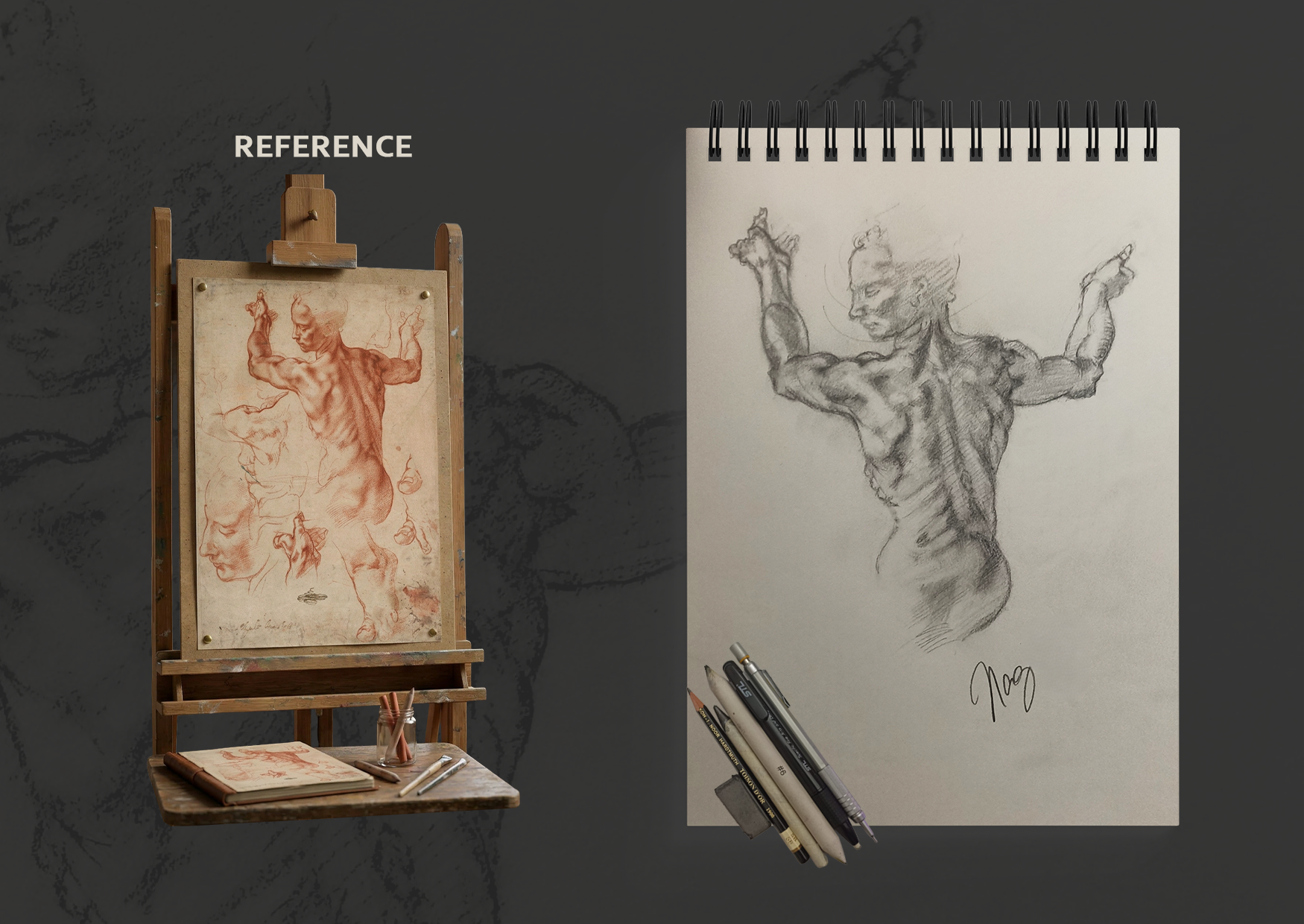
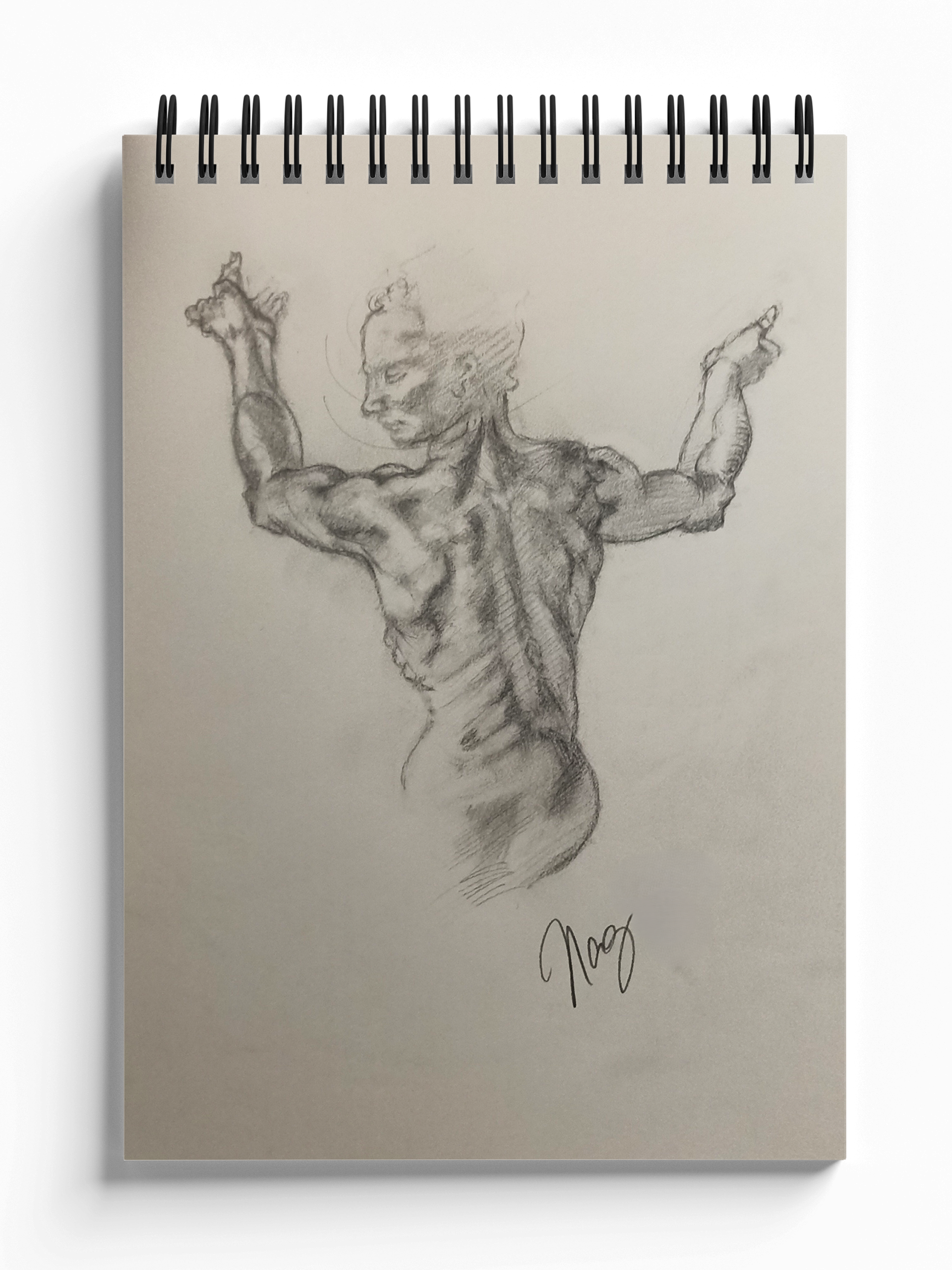
Of the master studies undertaken in this series, Michelangelo presented the most significant challenge. What made the process manageable was a reminder from Rey Bustos that proved well-timed: that the goal is not photographic reproduction, but artistic interpretation.
Having already worked through the underlying muscle groups, it became possible to approach Michelangelo's distortions not as errors to correct, but as deliberate decisions to understand. The anatomy was already internalized; what remained was learning to see how a master chooses to depart from it.
This video not only provided insight into the process but also shaped the spirit behind my work.
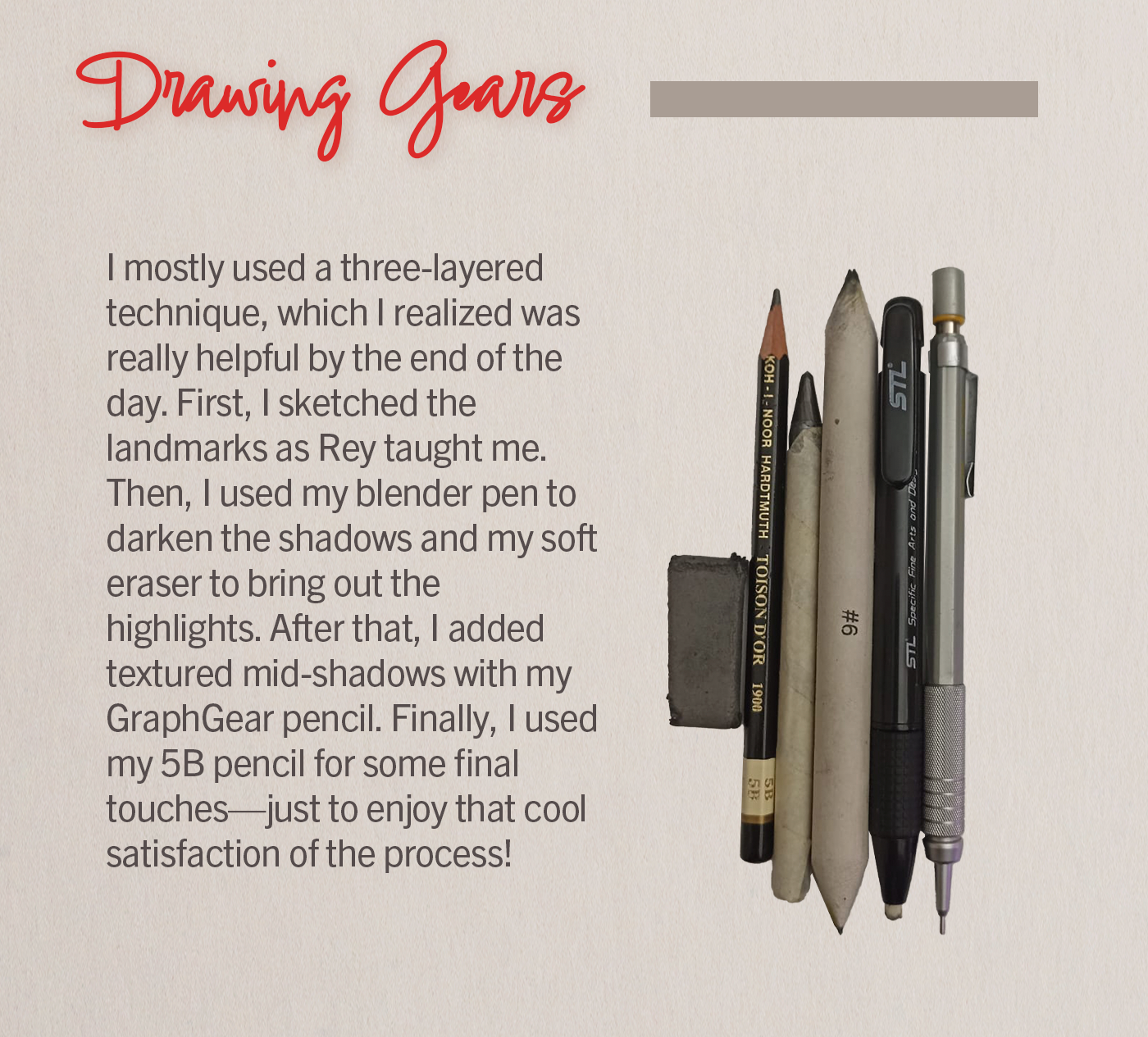
THANK YOU!